A buying guide for brands, retailers & wholesalers
Pocket spring vs foam mattresses for retailers and distributors
Choosing what to stock is more useful than declaring one mattress type the winner. Start with the role each model will play in your range.
The short answer
Choose the whole build, not the category name.
A pocket-spring mattress uses individually pocketed springs in its support construction; an all-foam mattress uses foam rather than a spring support unit. Both still need a defined layer specification, a sample review, and a suitable packing plan. Neither name tells a distributor what will sell, what will last longer, or what the delivered cost will be.
01 / Know what you are comparing
“Foam” and “pocket spring” are not always opposites.
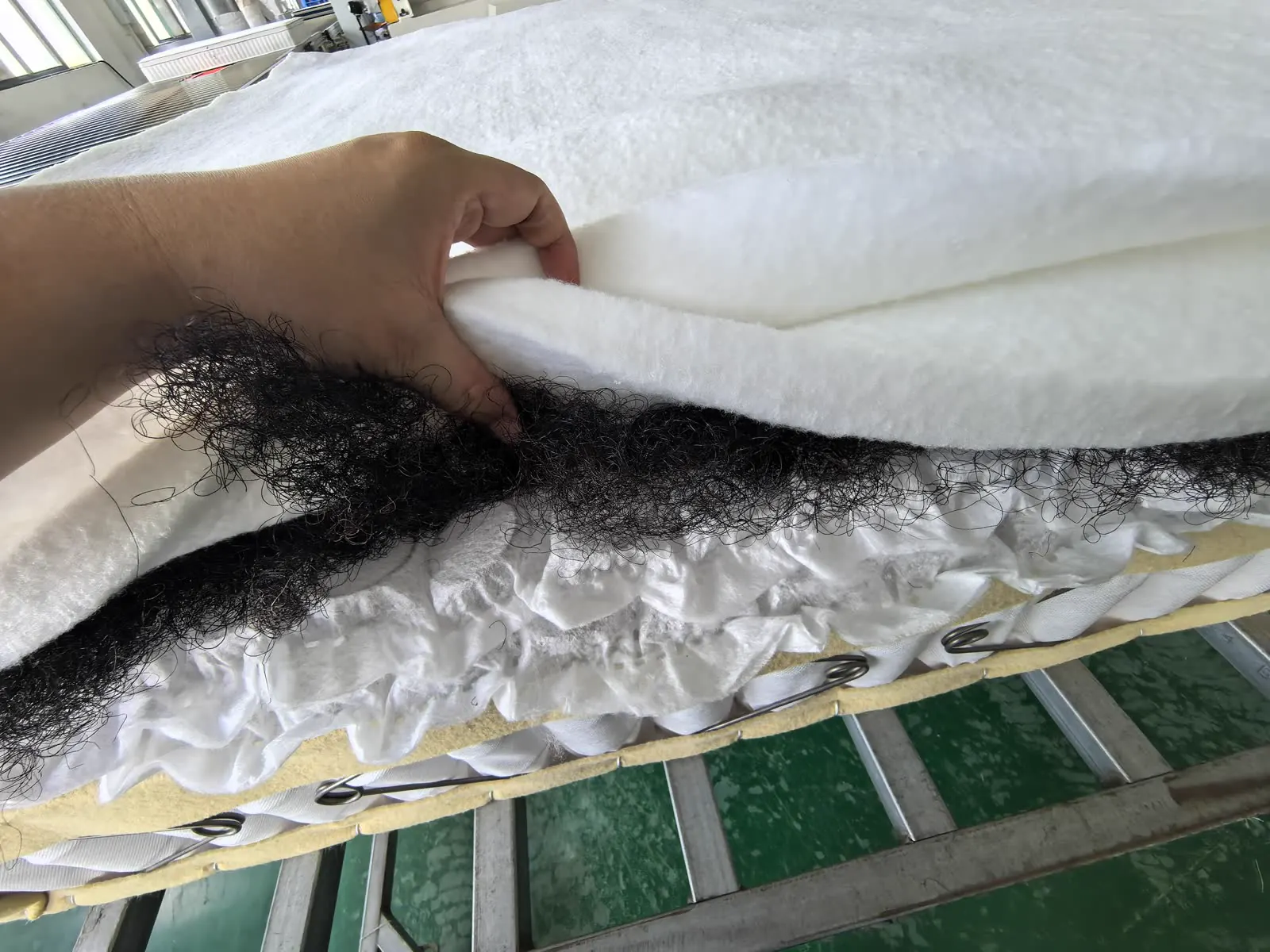
A sprung mattress can include foam comfort layers. An all-foam mattress can combine several foam types and thicknesses. Memory foam describes a material, not every foam mattress. Ask for the support core and the layers above it instead of accepting a cover name as the construction.
The National Bed Federation's mattress buying guide explains these construction categories and the use of different fillings. The comparison below turns that distinction into purchasing questions; it is not a laboratory ranking of Sipu models.
02 / Your comparison sheet
Ask for two complete specifications.
| Decision | Pocket-spring candidate | All-foam candidate |
|---|---|---|
| Internal build | Spring-unit specification, count for the stated mattress size, layer sequence, and edge construction. | Each foam layer's type, thickness, density specification, and support-core construction. |
| Comfort reference | Compare the complete sample on the intended base, including the comfort layers above the springs. | Compare the complete sample on the intended base; a material name is not a firmness reference. |
| Retail presentation | Record which verified construction differences your sales team can explain or demonstrate. | Record the actual layer differences; do not market every foam build as memory foam. |
| Packing | Confirm whether the exact spring, edge, and comfort-layer combination can use the proposed packing method. | Confirm packing suitability for the complete foam stack; do not assume every all-foam model can be stored rolled. |
| Price comparison | Obtain a quote for the agreed build, sizes, quantities, labels, packing, and shipping basis. | Use those same commercial inputs. Compare the quoted differences, not an assumed category discount. |
Keep missing values marked “to be confirmed”. For a fuller order record, use the mattress specification and quotation checklist. A larger spring count or an extra layer is a specification difference, not enough evidence on its own to promise better performance.
03 / Choose what earns a place in your range
What would the new model add?
Start with a gap you can describe: a comfort option your store lacks, a different construction for customers to try, or an alternative for an existing wholesale range. Do not buy two almost indistinguishable models simply to offer both categories.
Illustrative range decision: a furniture retailer already stocks one foam model and is considering a pocket-spring alternative. The first question is whether customers can recognise a useful difference in the samples. The next is whether the confirmed purchase cost and receiving route fit the business. This is a planning example, not a Sipu customer case or a sales forecast.
For a branded range, keep the chosen construction tied to one model code and label specification. See private-label range planning. If the purpose is backup supply, use the separate second-supplier evaluation guide.
04 / Let the sample answer a specific question
Compare under the same agreed conditions.
Record the sample's model code, size, specification revision, supporting base, and unpacking instructions. Compare the proposed candidates using that record. Note surface feel, edge feel, visible finish, and any difference from the agreed reference without turning a subjective impression into a measured performance claim.
Ask your showroom or purchasing team what the sample changed about the selection decision. If the concern is durability, fire performance, or another tested property, define the relevant test and model-specific evidence separately. A showroom trial is not a substitute for those checks.
05 / Follow the mattress to the receiving point
Will the packing work for your business?
Confirm the actual packed dimensions, gross weight, units per package, handling method, storage conditions, and unpacking or recovery instructions. A store taking flat-packed stock and an online retailer dispatching cartons may need different plans. Suitability still depends on the selected model.
Use the packing decision sheet to compare roll-packed and flat-packed proposals. For costs, keep the destination and shipping basis consistent using the export quotation scope. This guide provides no fixed freight saving or universal recovery time.
Copy into your purchasing notes
Your range-selection brief
- Business and market
- Retailer / brand / distributor; country and selling channel.
- Range gap
- What the existing range lacks and what the new model should add.
- Candidates
- Pocket-spring build / all-foam build / still open, with known dimensions and approximate quantity.
- Sample decision
- What to compare, the reference base, and who will decide.
- Receiving route
- Showroom stock / warehouse / local delivery; packing and storage questions.
- Next step
- Discuss options / confirm a specification / review a quotation. List unresolved items.
Questions buyers ask
Which type has the better wholesale margin?
There is no margin figure that follows from the mattress category alone. Use the actual purchase and delivery costs, your selling price, and your own selling and after-sales costs. This guide does not forecast margin or demand.
Do I need every specification before contacting Sipu?
No. Start with your business type, market, product direction, and approximate quantity. Mark unknown sizes or packing details as open. A firm quotation comes after the relevant specifications and commercial scope are confirmed.
Can two models be combined to meet the minimum?
MOQ is 10 mattresses per model. Different models cannot be combined to reach the minimum. Size mix, sample arrangements, feasibility, pricing, and lead time are confirmed for the specific request.
Planning your next mattress range?
Tell us what you want the new model to add.
Share your market, selling channel, product direction, and approximate quantity. If you are still choosing between constructions, say what you would like to compare.