For mattress brands, wholesalers & distributors
How to evaluate a second mattress supplier
From sample approval to the first order: a practical checklist for deciding what must match, what may change, and what still needs evidence.
The short answer
Compare the supply process, not just the sample.
Evaluate a second mattress supplier against a written reference specification, then check the sample, packing, first-order evidence, and repeat-order controls against that same reference. A similar cover, the same height, or a lower unit price does not establish equivalent construction, feel, or delivery scope.
01 / Commercial fit
What job will the second supplier do?
Before asking for a catalogue, decide whether you need backup supply for an existing range, a different price tier, or a new private-label model. Those are different briefs. A backup candidate needs a clear list of non-negotiable requirements; a new range may allow more freedom in construction and presentation.
Write down the target market, selling channel, likely sizes, approximate quantities, and the gap you want to fill. Keep your current supplier's confidential information out of the brief. Share only specifications, photos, designs, and branding you own or have permission to use.
A useful starting brief: “We sell through furniture stores and want to evaluate an alternative for one existing mattress range. We need to agree which dimensions, comfort references, and packing details must stay consistent.” This is an illustrative brief, not a Sipu customer case.
02 / Like-for-like comparison
Separate “must match” from “may change”.
Give each candidate the same comparison sheet. Ask them to identify differences rather than simply answering “same as your sample”. Mark missing information as open; an empty cell is not an approval. The mattress specification matrix provides a starting structure.
| Compare | Record explicitly | Do not assume |
|---|---|---|
| Dimensions | Finished width, length, height, units, measurement method, and agreed tolerances. | “Queen” or “king” means the same dimensions in every market. |
| Construction | Spring system, layer sequence, relevant material specifications, edge and top structure. | A matching cover proves an equivalent internal build. |
| Comfort reference | Reference sample ID, supporting base, comparison conditions, and who accepts the result. | Two suppliers use “medium firm” in the same way. |
| Presentation | Fabric, quilting, approved label artwork, model code, and carton marks. | A branding change leaves every other requirement unchanged. |
| Packing | Flat or rolled method, packed dimensions, handling and unpacking instructions. | The candidate can use your current model's packing process unchanged. |
For each field, record the requirement, the candidate's proposal, the evidence, and your decision. If a detail may change, state the allowed change. Do not approve the whole model while an important difference remains unresolved.
03 / Sample review
Keep a sample record that production can actually follow.
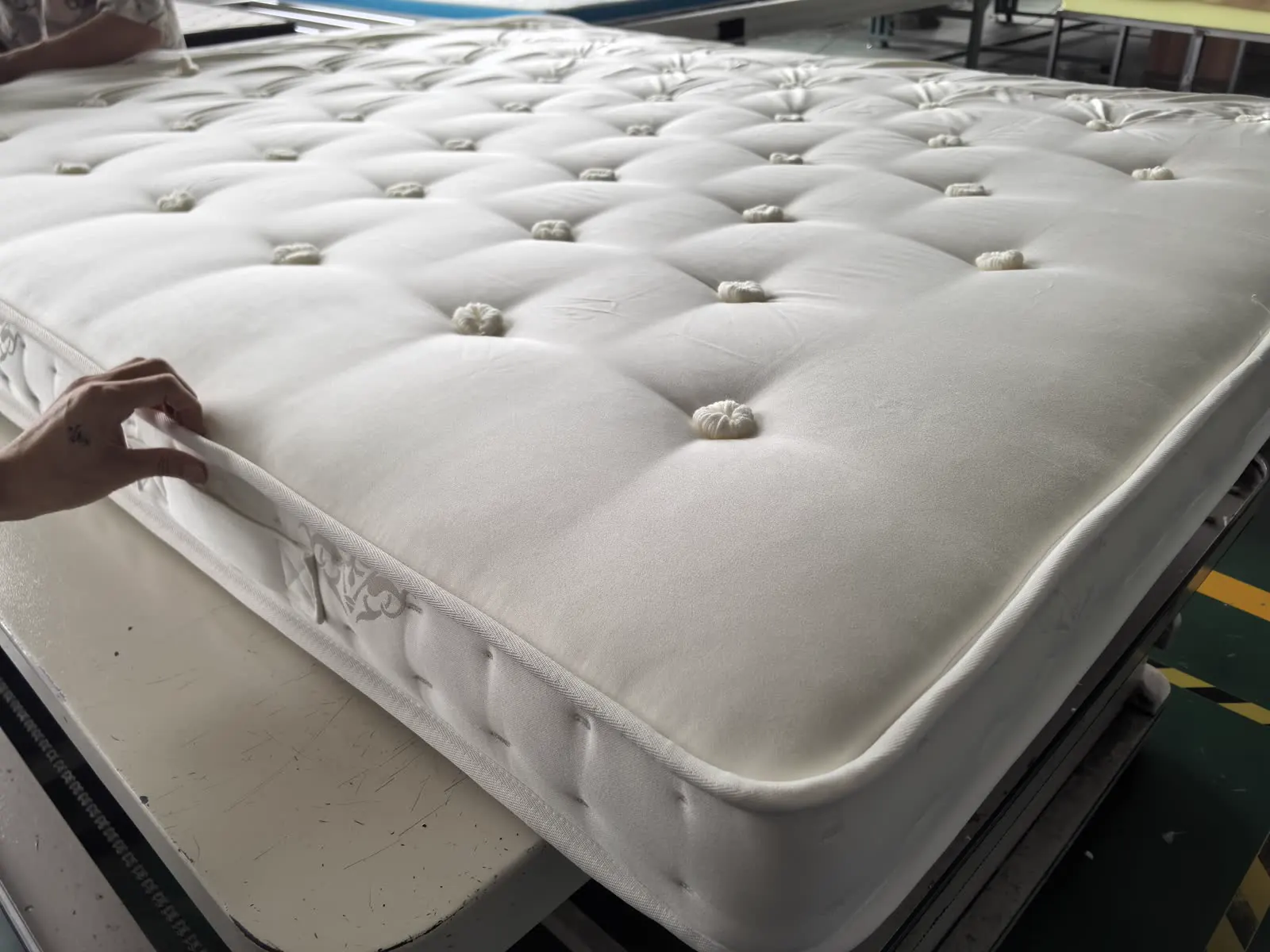
Identify the sample with a model code and specification revision. Record its measured dimensions, visible finish, comfort comparison, label, and packing condition. Where practical, compare reference and candidate under the same agreed conditions, including the supporting base and any unpacking or recovery instructions.
Photograph visible differences and describe what was measured. Agree acceptance criteria before judging the result, not after a disagreement. If the sample changes, issue a new revision and clearly retire the old approval.
A sample review is not proof that every mattress in a future batch will match. Where independent inspection or laboratory testing is required, define that work separately, including the selected model and destination requirements. A general factory document does not establish coverage for every proposed product.
04 / Receiving route
Compare the packed product and quotation scope.
Check whether the candidate will ship flat-packed or roll-packed, and whether that method suits the agreed construction and your receiving process. For rolled products, ask for the applicable storage, unpacking, and recovery instructions; do not copy a time limit from another model. See the roll-compression planning guide.
Use the same quantities, packing assumptions, destination, and shipping basis when comparing quotations. List what is included, excluded, still estimated, or subject to confirmation. A product-only price and a quotation that includes additional services are not directly comparable. The export supply page explains the comparison fields; it does not provide a fixed freight-saving promise.
05 / First-order evidence
Agree the checks before production starts.
Reference the approved model, specification revision, quantities by size, labels, and packing in the order documents. Identify the person who can accept a deviation and the checks that must be completed before shipment release.
- Match finished-product measurements and visible details to the agreed specification.
- Match labels and carton marks to the approved artwork and model code.
- Reconcile quantities by model and size with the packing list.
- Record unresolved differences, corrective action, and the approval decision.
- Agree the receiving checks so the warehouse can compare the arrival with the shipment record.
Choose the inspection scope with the responsible buyer and, when needed, the inspection provider. This guide does not prescribe a universal sampling rate or substitute for an independent inspection. Use the pre-shipment proof-pack method to organise the supporting records.
06 / Repeatability
Do not let “same as last time” become the specification.
Keep the approved specification revision, sample reference, artwork, packing record, inspection findings, and receiving feedback together. Before reordering, confirm which version applies and ask whether any material, construction, label, or packing change is proposed.
If a change affects an agreed requirement, record the difference and decide whether another sample or check is needed. A first order can support a decision to continue evaluation; it cannot establish long-term consistency by itself.
A reusable buying tool
Your second-supplier decision sheet
Copy these fields into your purchasing record. Keep confidential supplier and customer information in your own files.
- Evaluation purpose
- Backup supply / new price tier / new branded model
- Product reference
- Model code, specification revision, sample ID, intended market
- Comparison
- Must match / may change / open question, with evidence for each
- First-order checks
- Measurement method, inspection scope, label and packing checks
- Decision
- Proceed to next stage / revise and recheck / do not proceed
- Responsibility
- Approver, decision date, unresolved items, next review point
Practical stop point: if the candidate will not identify a material difference, cannot connect the sample to an agreed specification, or cannot resolve an important packing mismatch, do not treat that item as approved.
Questions before you start
Can a photo replace a reference specification?
No. Use a photo to discuss visible design, then separately record dimensions, construction, comfort reference, packing, and acceptance criteria. Share only material you have permission to use.
Does an approved sample mean the supplier is fully approved?
No. It records the outcome of that sample review. First-order production evidence, receiving results, and change control remain separate parts of the evaluation.
What is Sipu's minimum order quantity?
MOQ is 10 mattresses per model. Different models cannot be combined to reach the minimum. Size mix, sample arrangements, packing, feasibility, pricing, and lead time are confirmed for the specific request; a regular order MOQ is not a promise about sample availability.
Considering Sipu as a supply option?
Tell us what your second source needs to do.
Start with your market, product direction, approximate quantity, and the requirement you most need to keep consistent. You do not need to send a competitor's confidential documents.